Meeting Info
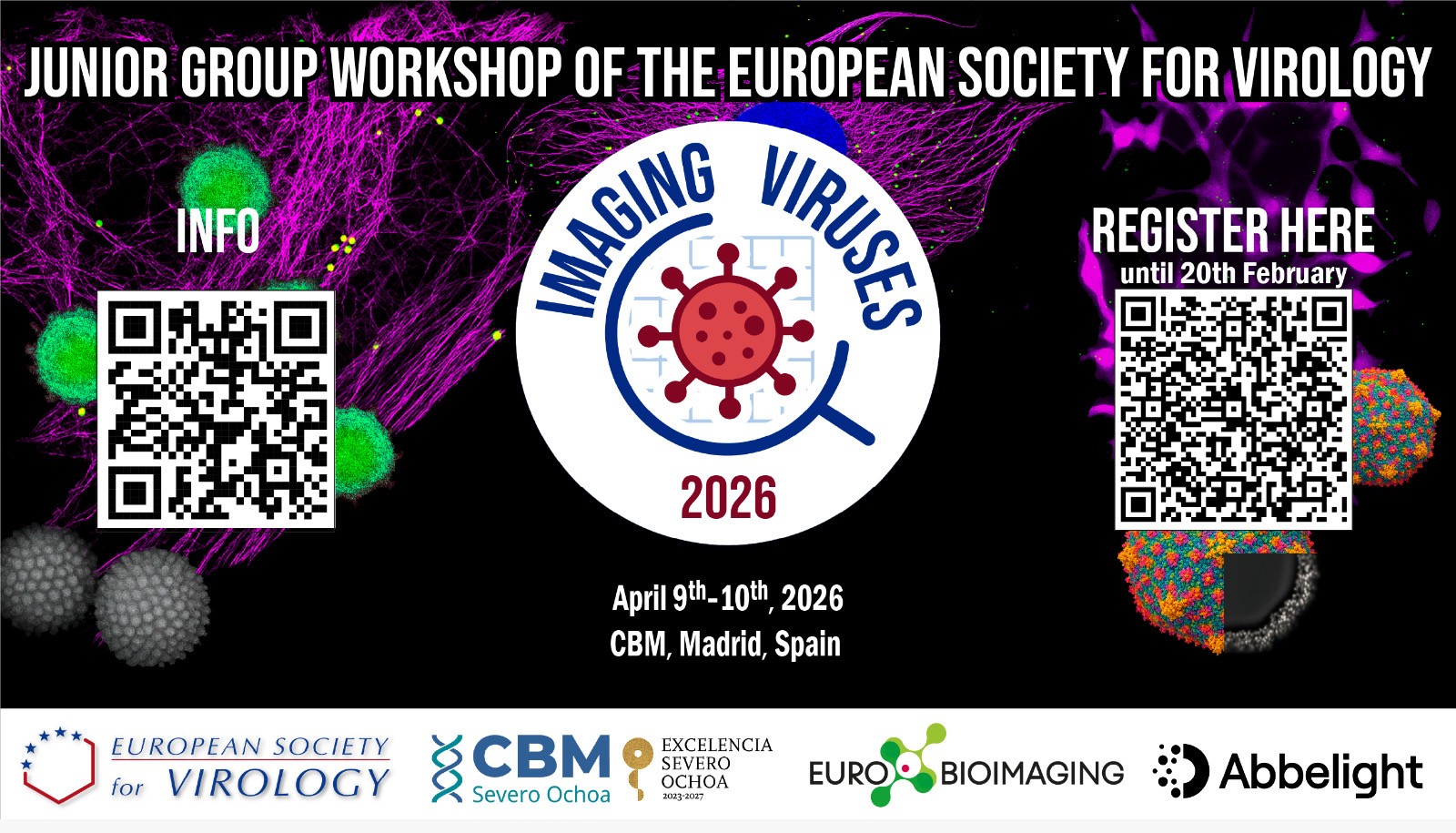
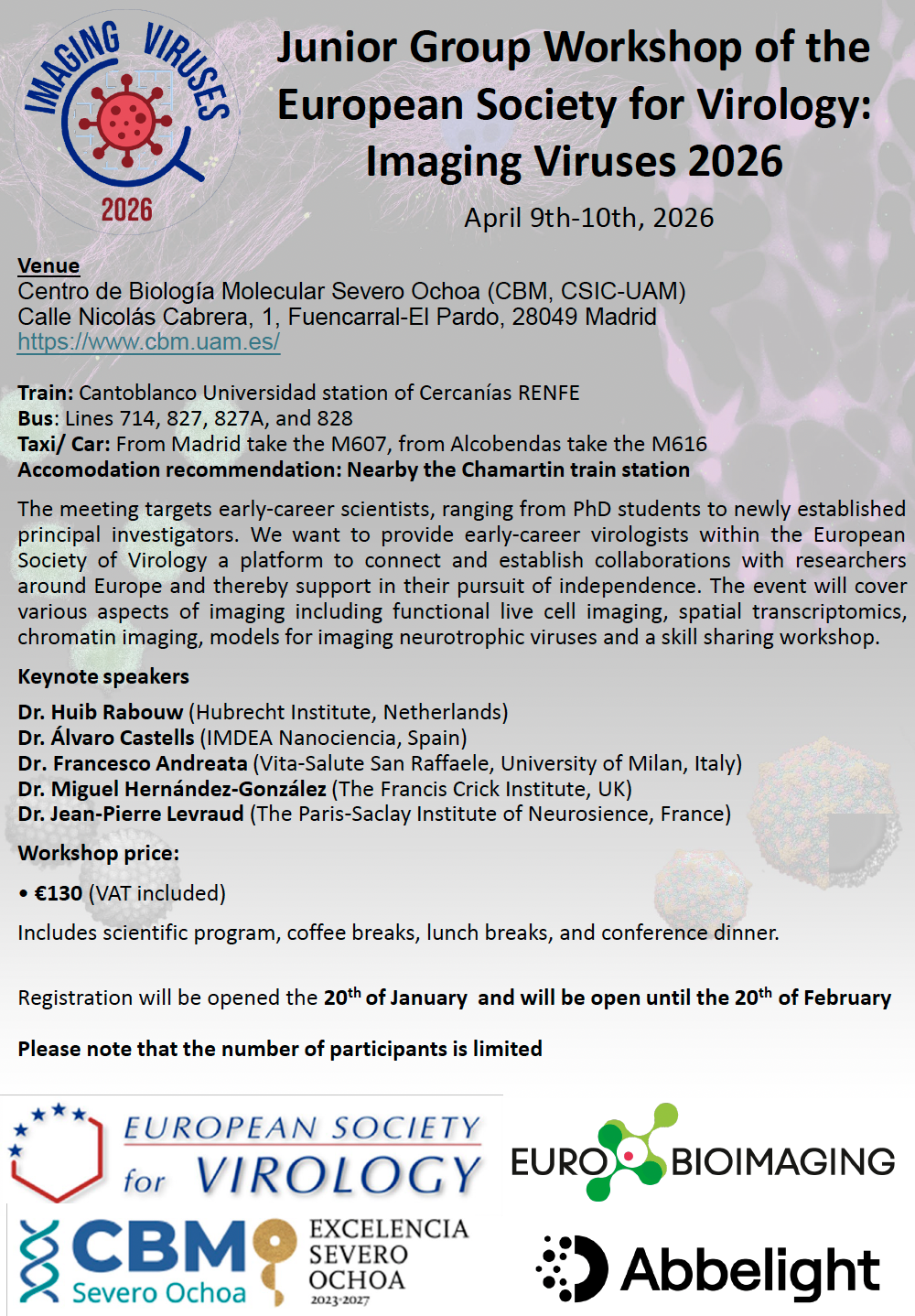
This meeting brings together early-career virologists, from PhD students to newly established principal investigators, offering a unique opportunity to connect with peers and leading experts across Europe. Designed to foster collaboration and support the transition to scientific independence, the event provides a dedicated platform for networking, idea exchange, and community building within the European Society of Virology.
The scientific program will highlight cutting-edge imaging approaches in virology, including functional live-cell imaging, spatial transcriptomics, chromatin imaging, and advanced models for imaging neurotropic viruses. In addition, participants will benefit from an interactive skill-sharing workshop aimed at exchanging practical expertise and methodologies.
The meeting will feature keynote lectures from internationally recognised researchers:
- Dr. Huib Rabouw (Hubrecht Institute, The Netherlands)
- Dr. Álvaro Castells (IMDEA Nanociencia, Spain)
- Dr. Francesco Andreata (Vita-Salute San Raffaele University, Milan, Italy)
- Dr. Miguel Hernández-González (The Francis Crick Institute, UK)
- Dr. Jean-Pierre Levraud (Paris-Saclay Institute of Neuroscience, France)
Accomodation
The organisers recommend the following hotels:
Registration
Deadline: February 20, 2025
Program
Organizers
- Salla Mattolla, PhD (University of Jyväskylä, Finland)
- Carlos Gallego-García, PhD (Centro de Biología Molecular Severo Ochoa, Spain)
- Visa Ruokolainen, PhD (University of Jyväskylä, Finland)
- Esther González-Almela, PhD (Centro Nacional de Biotecnología, Spain)
- Dörte Stalling, PhD (Hannover Medical School, Germany)
- Joseph Mcgrail Gámiz (Autonomous University of Madrid, Spain)
- Elena Criscuolo, PhD (Vita-Salute San Raffaele University, Italy)
- Prof. Michael Kann, PhD (University of Gothenburg, Sweden) – President of the European Society for Virology (ESV)
We look forward to welcoming you to this exciting event, where early-career scientists can connect, share ideas, and build collaborations that help shape the future of virology.