Scientific Program
Physiological and Pathological Processes
RESEARCH GROUP
Neuronal Morphogenesis and Circuit Development
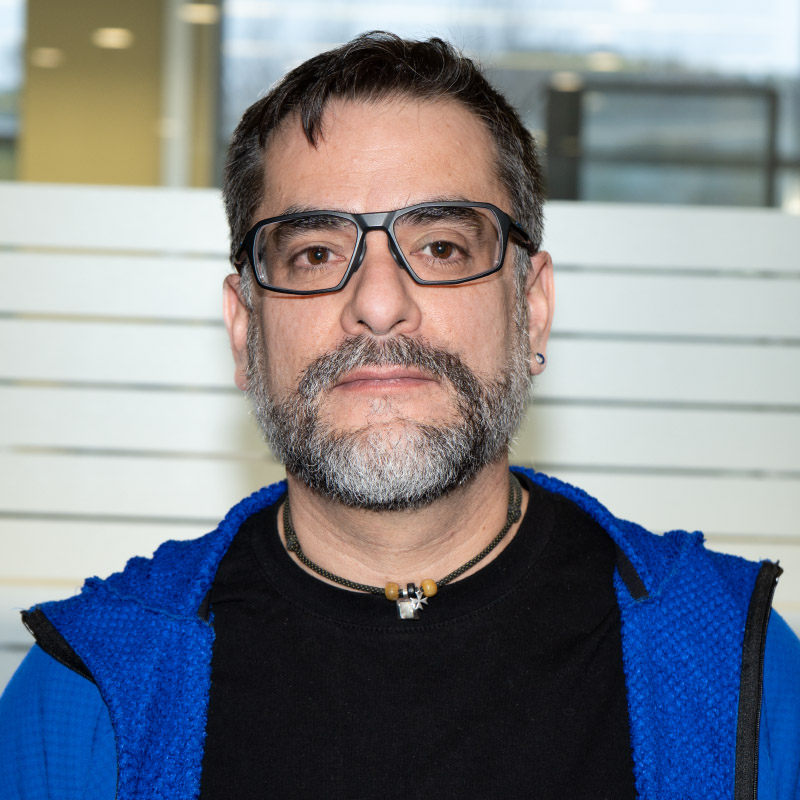
Froylan Calderon de Anda
During brain development, functional circuits form while the brain is highly vulnerable to genetic and environmental disruptions. Altered cortical development raises the risk of disorders such as ASD. We study how extrinsic factors (e.g., maternal immune activation) and intrinsic genetic and epigenetic programs shape neuronal fate, migration, axon and dendrite formation, and connectivity.

Research
Understanding how neurons differentiate and assemble into functional circuits in the developing brain remains one of the central challenges in neuroscience. During early brain development, when these circuits are formed, the brain is especially sensitive to both genetic and environmental perturbations. Disruptions in cortical development are therefore thought to contribute to the emergence of neurodevelopmental disorders such as autism spectrum disorders (ASDs) and schizophrenia. Despite significant advances, the complexity of mammalian brain development still limits our insight into the mechanisms that govern the formation of functional networks and how their alteration leads to selective neuropsychiatric vulnerability.

ASDs affect a substantial proportion of the population and are characterised by a spectrum of behavioural alterations, including differences in social interaction, communication, cognition, and motor function. Increasing evidence points to ASDs as highly heritable developmental synaptopathies, involving impairments in dendritic development, synapse formation, neuronal connectivity, and the balance between excitation and inhibition. Genetic studies have identified numerous risk genes, many of which are expressed in neurons and play key roles in neurodevelopment. Among the most prominent genomic regions associated with ASD is the 16p11.2 locus, where recurrent microdeletions or duplications—encompassing 31 genes—account for up to 1% of diagnosed cases. However, no single gene within this region fully explains the broad spectrum of associated phenotypes.
Our research focuses on Thousand and One Amino Acid Kinase 2 (TAOK2), a serine/threonine kinase located within the 16p11.2 region that regulates critical developmental processes. Our findings identify TAOK2 as a bona fide risk gene for neurodevelopmental disorders and a key contributor to ASD pathophysiology linked to the 16p11.2 microdeletion. We have further demonstrated that TAOK2 is involved in translational control, supporting the emerging view that dysregulated protein synthesis represents a common downstream mechanism in ASD-associated signalling pathways. Nevertheless, the precise contribution of TAOK2 to neuronal circuit formation and its role within the broader 16p11.2 genetic network remains to be fully elucidated.
Importantly, ASDs do not arise solely from genetic factors. Environmental influences—including maternal exposure to toxins, infections, malnutrition, and other stressors—also play a significant role in shaping neurodevelopmental outcomes. How these genetic and environmental factors interact at the molecular and cellular levels to disrupt brain connectivity is still poorly understood.
Against this background, our research aims to: (i) define the molecular interaction network of TAOK2 and the 16p11.2 microdeletion to identify targets for therapeutic intervention; (ii) characterise molecular changes in developing cortical neurons exposed to environmental stressors such as maternal immune activation; and (iii) determine whether diverse genetic and environmental insults converge on common synaptic pathways. Through this integrative approach, we seek to uncover fundamental mechanisms of brain development and identify novel strategies for intervention in neurodevelopmental disorders.
Group members
Froylan Calderón de Anda
Lab.: 207 Ext.: 4562
fcalderon(at)cbm.csic.es

María Teresa Hernández Iglesias
Lab.: 207 Ext.: 4562
teresaig(at)cbm.csic.es

Celia Madejón Mandado
Lab.: 207 Ext.: 4562
celia.madejon(at)cbm.csic.es
Selected publications

Centrosome localization determines neuronal polarity
Froylan Calderon de Anda et al.

Autism spectrum disorder susceptibility gene TAOK2 affects basal dendrite formation in the neocortex
Froylan Calderon de Anda et al.

Altered TAOK2 activity causes autism-related neurodevelopmental and cognitive abnormalities through RhoA signaling
Melanie Richter et al.

The autism susceptibility kinase, TAOK2, phosphorylates eEF2 and modulates translation
Melad Henis et al.
Latest publications
Scientific Programs